Showing posts with label oil pastels. Show all posts

Wednesday, February 18, 2026

Oil Pastels: In or Out?


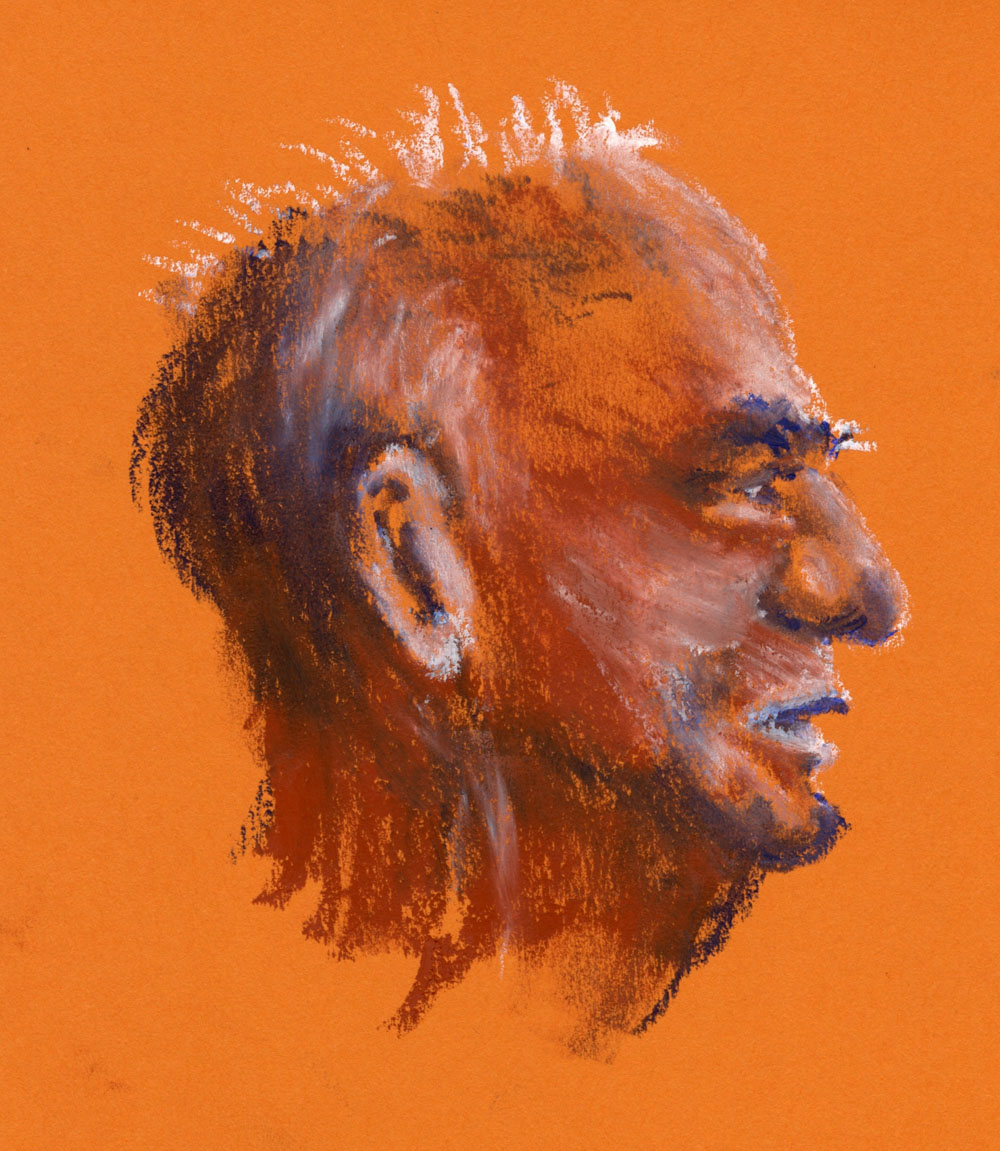
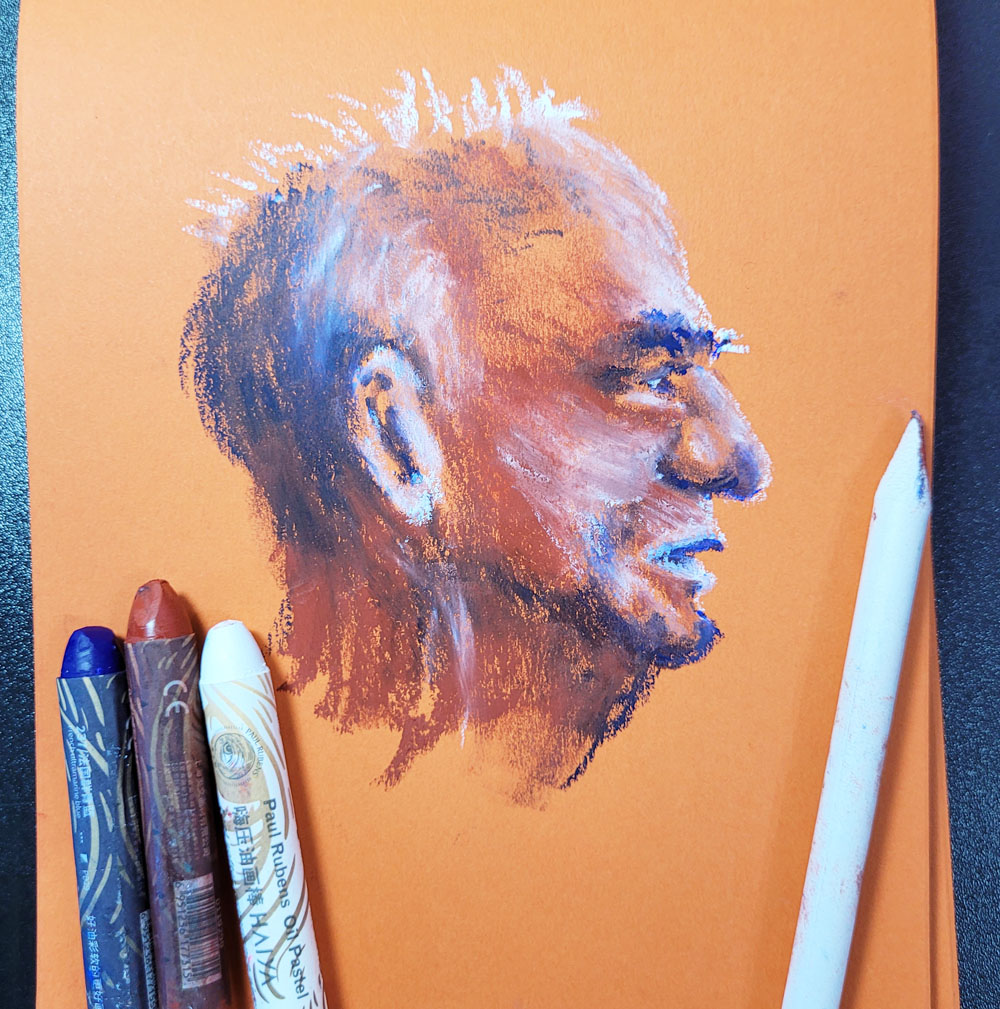
2/4/26 Haiya Paul Rubens oil pastels in Canson XL mixed-media sketchbook (photo reference)

Last year when I did my big downsizing of art supplies, it was easy to keep the things I use regularly or know that I enjoy using, even if I use them infrequently. It was also easy to get rid of things I knew I would never use. The difficult job was the whole middle ground: Things I wasn’t sure if I liked enough to keep, but maybe wanted to try again sometime.

This year my job is to go through that relatively small pile of uncertainty and decide, one way or the other. In that pile were a couple of sets of oil pastels I had purchased during the pandemic (during late-night retail therapy sessions to treat my probably common malady of boredom mixed with anxiety). Ironically, I tried them a bit during my own bout with COVID when I had plenty of sequestered time to experiment, but not much afterwards.

Do I like Caran d’Ache Neopastels and Haiya Paul Rubens oil pastels? Right off the bat, they have two strong disadvantages to my sketching lifestyle: They require a fairly large sketchbook, and they are messy, both on the hands and in forever transferring to other surfaces. That means I will never take them out to sketch on location. Anything that I can use only at home rarely gets used.

I decided to make a sketch with each product to remind myself of the experience. As I discovered the first time, I love the effects I can get with very soft and schmushy Haiya oil pastels (top of post). Using a smudging tool, the creamy, lipstick-like sticks can be blended as much as desired. I applied them fairly lightly, but I’ve seen demos online in which the product is applied and blended so heavily that the results can look like oil painting.

The Neopastels are much drier and not as easy to blend (sketch below). I immediately decided that I would not keep the set, although it was several times more expensive per stick than the Haiya set. But I was still unsure about the latter.

2/4/26 Caran d'Ache Neopastels in Canson XL mixed-media sketchbook (photo reference)

Since Mary Jean and Roy had both played with oil pastels, we decided to devote an art play date to sharing and exploring our various oil pastel products. To give the Haiya set one more try, I made the sketch below (it looks a bit abstract, but it’s an x-ray of my right shoulder, which was just diagnosed with adhesive capsulitis, or “frozen shoulder”).

2/13/26 Haiya Paul Rubens oil pastels in Canson XL mixed-media sketchbook (X-ray reference)

By the end of that sketch, I was almost ready to give up that whole set, too – but not quite. I compromised by keeping 10 colors from the set of 48, then let MJ have the rest. Roy got the Neopastels. My arty friends will make better use of them than I ever will.

While they continued making a mess, I retreated, with much relief, to the clean and tidy Caran d’Ache Neocolor II crayons (below) in my newly MacGyver’ed kit.

2/13/26 Third Place Commons (Neocolor II crayons in Hahnemuhle sketchbook)

Kids on the playground!

Saturday, January 18, 2025

BIG Play Date


1/15/25 Third Place Commons (Neopastels)

Inktense Blocks
For most of a year now, I’ve been exploring a comics approach to on-location sketching (and thinking in terms of comics in general). I still love it, and there’s still much to learn and try. But I’ve lately been feeling constricted by my small sketchbook format made even tighter by the multi-panel approach. Each sketch ends up being only two or three inches, which requires using finer media and small spots of color. I’ve been craving BIG! Or at least bigger.

The thing is, I don’t like using thick, soft media when I’m sketching on location in my usual manner: standing. I need a table for support so that I can apply pressure to a larger page, which limits the places I can use them. But winter is when I spend the most time sketching indoors in cafes and such, so it’s a good time to go big and chunky.

I knew that they had both been using them lately, so for our next play date, I proposed to Roy and Mary Jean that we all bring our fat media: Crayons, pastels, chunky water-soluble sticks. I hoped that hanging around with them as they used theirs would encourage me.

And it did! With all of us spreading our toys out on a large, round table at Third Place Commons, I had no trouble jumping into the thick of things, so to speak. I used Caran d’Ache Neopastel oil pastels (which I had previously tried only on portraits) and Derwent Inktense Blocks. Next time, I think I’ll bring some Caran d’Ache Neocolor II water-soluble crayons.

Nothing like chunky toys and inspiring playmates to kill the winter blahs!

Inktense Blocks

Our playground!

Sunday, August 6, 2023

Messing Around with Haiya Paul Rubens Oil Pastels


8/1/23 Haiya oil pastels in Uglybook sketchbook (Earthsworld
reference photo)

And “messing” is the operative word here.

Ever since late last year when I started dabbling in Caran d’Ache pastel pencils and then in Caran d’Ache Neopastels, I’ve been trying to find a way to enjoy using pastels in general. Intrigued by opaque media while simultaneously being annoyed by the mess, I keep tiptoeing back because I love the effects that can be achieved, especially with challenging subjects like portraits. Unlike transparent media, pastels are so much more forgiving when it comes to blending and layering skin tones or refreshing lost highlights. I’m still avoiding traditional soft pastels that produce airborne pigment particles, but oil pastels seem like a good compromise between material safety and opaque fun.


My latest experiment is the result of a late-night YouTube binge a few weeks ago. I think Painting and Chocolate’s channel started appearing in my feed because this mixed-media artist seems to mix watercolor pencils with other materials more often than most colored pencil artists I’ve viewed. Ironically, this video doesn’t involve watercolor pencils at all – it’s about Haiya’s Paul Rubens Oil Pastels. I wasn’t necessarily looking for another set of oil pastels, but she managed to persuade me to put a set into my Amazon wishlist. Shortly thereafter, Prime Day happened, the price went down, and you know how that goes.

When I finally got around to trying them with this Earthsworld portrait, I was immediately surprised by how soft they are compared to the Neopastels (my only other experience with oil pastels). I had described Neopastels as smooth, creamy and lipsticky, but compared to the Haiya, they are sticks of dry chalk – that’s how truly smooth, creamy and lipsticky the Haiya are. I remember being disappointed by the Neopastels because they took more effort to blend than I had expected. The Haiya, on the other hand, can be easily pushed and smushed around with a blending stump, paper towel or finger (though not mine!).


I do like these Chinese colors!


In an Uglybook sketchbook, which has a mild tooth, I spent only 15 minutes on this roughly blended portrait. It was great fun not having to remember to reserve highlights, and I could continue pushing and playing without hitting the immediate “overworked” look I get so easily with watercolors. I enjoy both the blendability and the effects of oil pastels.

The aftermath, however, is less enjoyable. I wanted to take a photo to show you how messy my hands got, even with wrapped sticks, but I didn’t want to touch my phone (and the stuff did not wash off my hands as easily as I had expected)! I dreaded putting the sketch on my scan bed because I knew I would have to clean it afterwards. Yuck.

Messy fun!

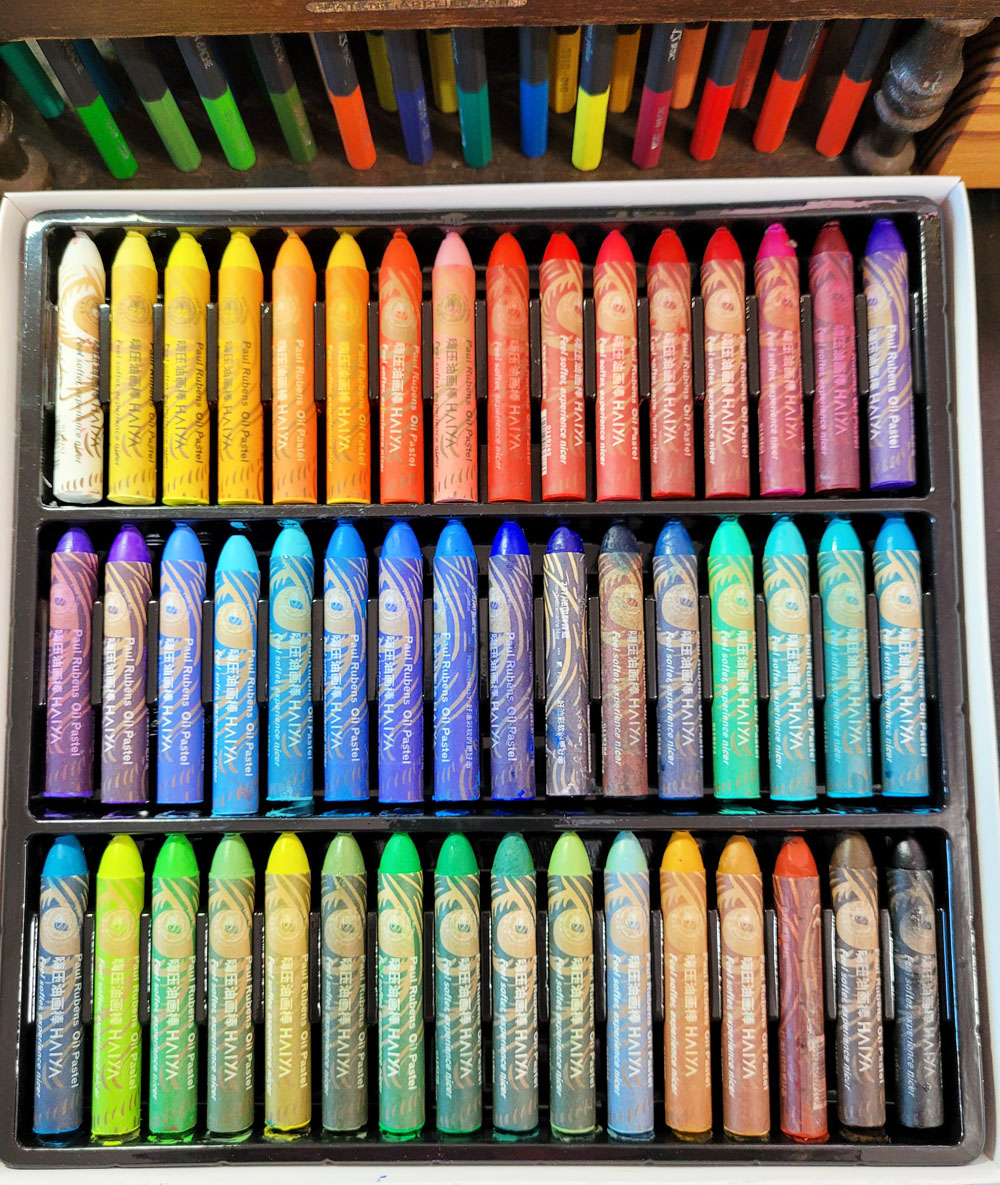
If you are thinking about dabbling in oil pastels, this set is a terrific value. At less than one-fourth the price of Caran d’Ache Neopastels (surprise, surprise), the set of 48 is larger than most people would need, given how easy and fun they are to blend, but I couldn’t find a smaller set. (I did find this set of 50, which seemed like an odd variation, but it turns out to be an older generation with a flat end instead of tapered. I don’t know if they are different in other ways.)

If I get past the mess issue (gloves?) long enough to keep using these, I’ll do a full product review eventually.

Friday, February 10, 2023

Neopastel Portraits

2/5/23 Stillman & Birn Zeta (all reference photos by Earthsworld)

Here are a few more portrait experiments with Caran d’Ache Neopastel oil pastels. The first two are in a Stillman & Birn Zeta sketchbook, which has a smooth surface compared to the toothy Hahnemühle example I showed a few days ago. Unlike traditional soft pastels and pastel pencils, which require a strong tooth, these oil pastels are billed as workable on just about any support, including non-porous surfaces like glass. I suppose they are similar to grease pencils in that regard.

Because they’re so soft and creamy, I expected them to blend more easily, but it took some work pushing them around with a stump.

2/5/23 S&B Zeta

Next I tried colored papers: The black one is a Stillman & Birn Nova sketchbook, and the orange one is an Uglybook. As I had hoped when I got the set, they are very opaque on dark papers. I can use lighter colors right over darker colors easily. (Apologies for the poor images . . . the black paper, especially, is so reflective. I hope to get back to my scanner soon.)

2/6/23 S&B Nova

2/6/23 Uglybook

I’m a pointy pencil gal. One thing I keep having to remind myself as I use these blunt, chunky sticks, which are the diameter of kids’ crayons, is that I can’t exactly draw with them. They are intended for making broad strokes of color, almost like painting. I should probably be using a larger sketchbook if I want to go into delicate facial details. They really shove me out of my comfort zone, and I’m enjoying the shove.

Wednesday, February 8, 2023

Tiptoeing Toward Pastels


2/4/23 Neopastels in Hahnemuhle sketchbook
My portraiture study has piqued my curiosity about opaque media. Most of the artists I follow for portraiture work in oils or gouache, and I can see the advantages of opaque paints. Among dry media, pastels are probably the most opaque, and I’ve dabbled a bit with pastel pencils. I’m trying to avoid traditional soft pastels (the kind that produce the most dust and mess), but I’m tiptoeing in that direction.

One of the things I grabbed quickly from my studio before sequestering was a small set of Caran d’Ache Neopastels. They are categorized as oil pastels, which have a soft, lipsticky consistency that produces no dust. They smudge a lot, though, so they are still messy, but at least the mess isn’t airborne. In this first try (at left), I was just getting a feel for them. The 100 percent cotton Hahnemühle sketchbook has a relatively strong tooth that grabs oil pastels and imparts an interesting texture. Unlike traditional pastels, though, oil pastels apparently work well on smooth papers as well as toothy. I grabbed a Stillman & Birn Zeta sketchbook, too, so I’ll be experimenting soon.

2/4/23 ArtGraf water-soluble graphite in Hahnemuhle sketchbook

The other three portraits here are water-soluble materials I’m more familiar with: a Viarco ArtGraf graphite pencil, Caran d’Ache Neocolor II crayons, and a Caran d’Ache Museum Aquarelle colored pencil.

This bunch turned out to be a fun mix of realism and -- not. (Im never sure what to call works that are not quite abstract or impressionistic but also not realistically detailed. Whatever.)

(With nothing much in the TV room to draw, I’m certainly happy and grateful to have Earthsworld’s photography to use as convenient portrait references.)

2/4/23 Neocolor II in Hahnemuhle sketchbook

2/4/23 Museum Aquarelle in Hahnemuhle sketchbook

Related Posts Plugin for WordPress, Blogger...