Showing posts with label pencil sharpener. Show all posts

Monday, January 15, 2024

Review: AFMAT Electric Pencil Sharpener


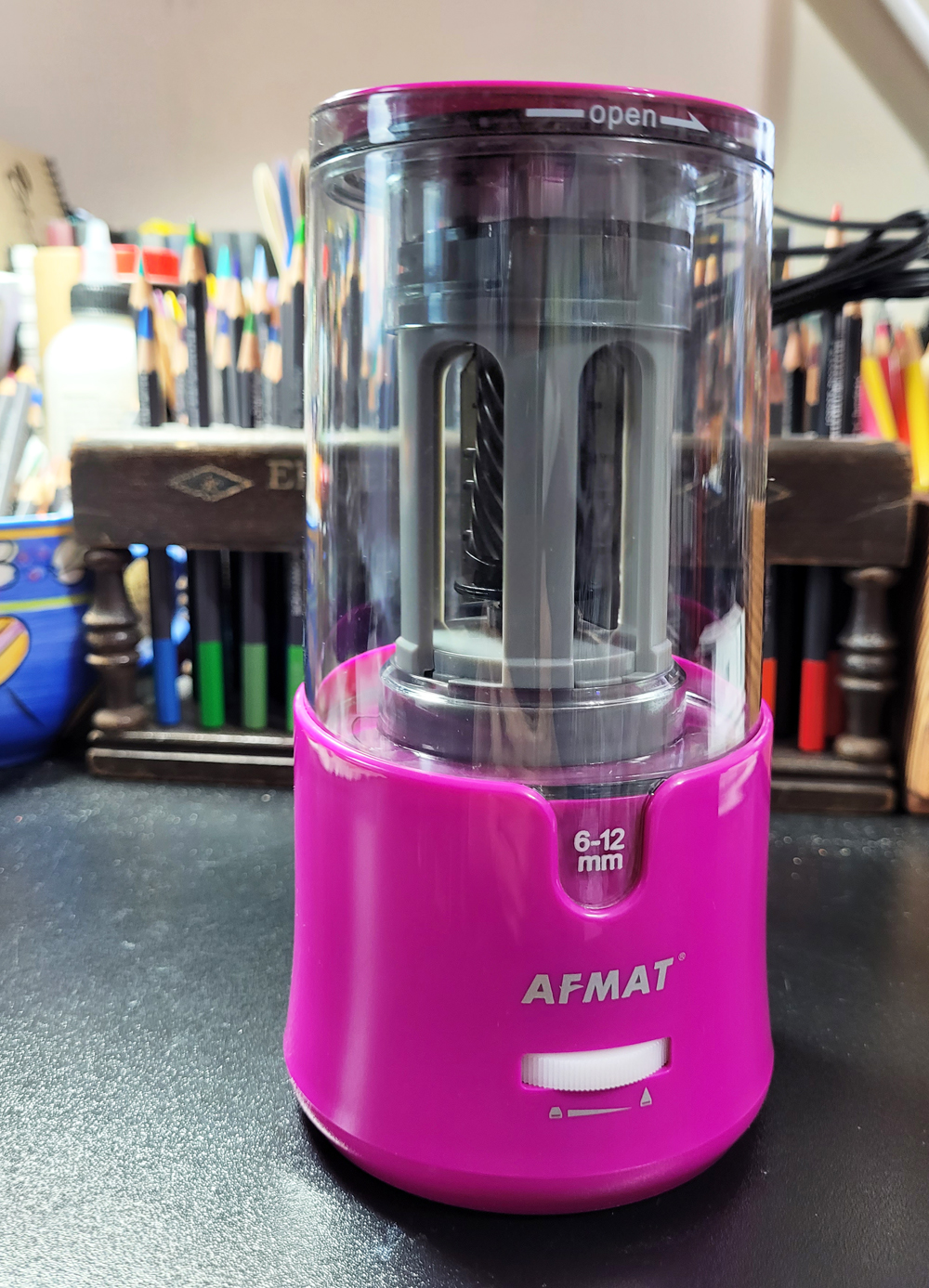
AFMAT electric sharpener

I don’t use electric sharpeners routinely (that job goes to my favorite Carl Angel-5 Royal), but every now and then when I have a whole set of pencils to sharpen at once, doing all that cranking is tiresome and time-consuming. That’s when I pull out the behemoth Bostitch Quiet Sharp 6. Just lately, though, it has been making a worrisome noise, and I’m afraid it might malfunction one day. In any case, almost as if YouTube could read my mind (I hadn’t even typed “electric sharpener” into my browser!), I was presented with a review of this AFMAT sharpener.

I was already familiar with AFMAT sharpeners – I had purchased one quite a while back because it was known for producing crazy-long points, and I was curious about using pencils sharpened that way. I ended up returning it immediately because it has a ridiculous charging system that requires a USB port, not an AC adapter, and it can’t be used while it’s charging! What a stupid design for a pencil sharpener!

Anyway, that experience had made me leery of AFMAT. The review I viewed, however, showed some gorgeous points on larger-barreled pencils and even charcoal, pastel and other pencils that are known to be difficult to sharpen without breaking. The reviewer also mentioned that the sharpener uses a standard AC adapter – no charging necessary. (The Amazon description says it runs on batteries, but it does not.) My curiosity got the better of me.

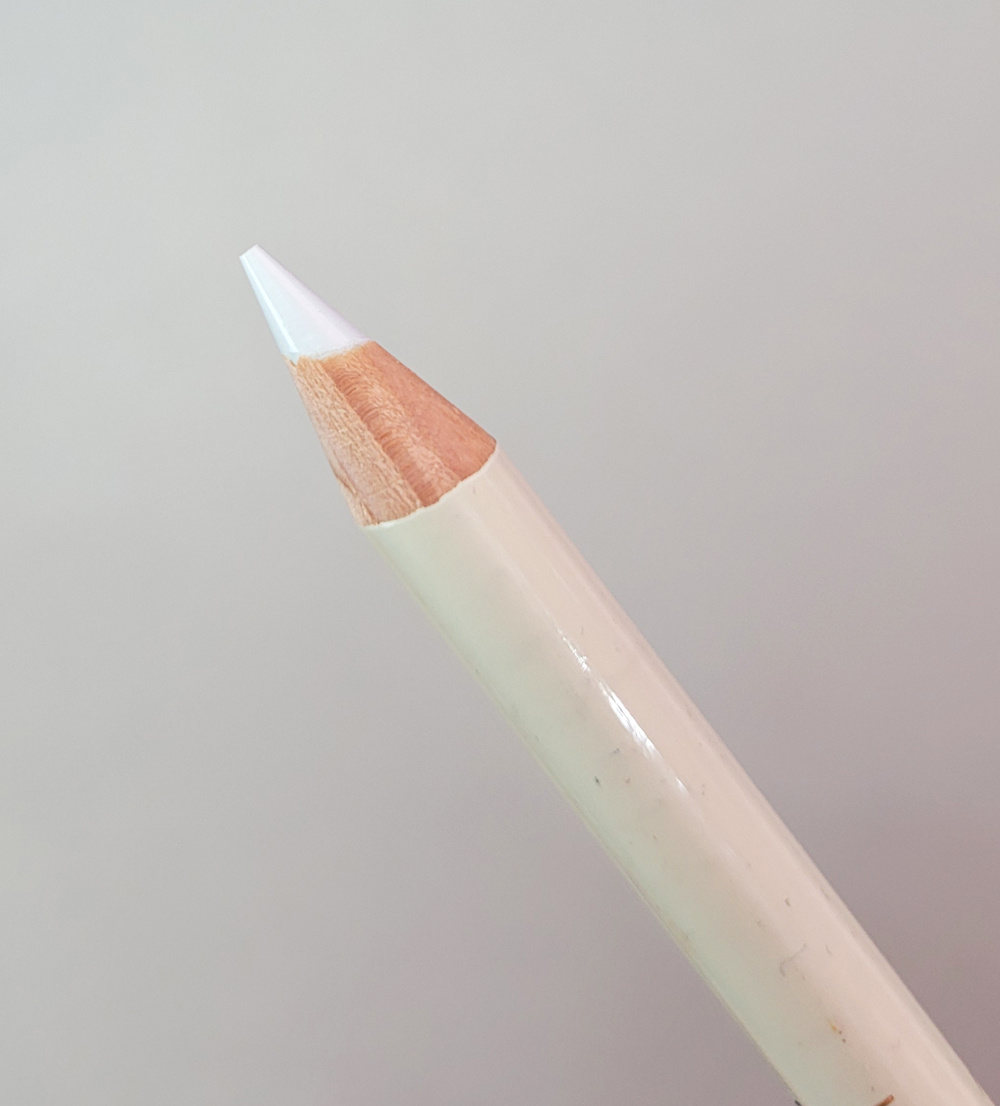
I chose four pencils to test: First up was a Conte charcoal pencil with a hefty barrel – a smidge larger than Derwent Drawing and Caran d’Ache Museum Aquarelle pencils, which are the two pencils I use most often with larger-than-average barrels. Due to their fragile nature, I typically sharpen charcoal pencils with a knife, but I shoved this one in with abandon. The auto-stop stopped, and out I pulled a beautiful point! The auto-stop is a handy feature for any electric sharpener.
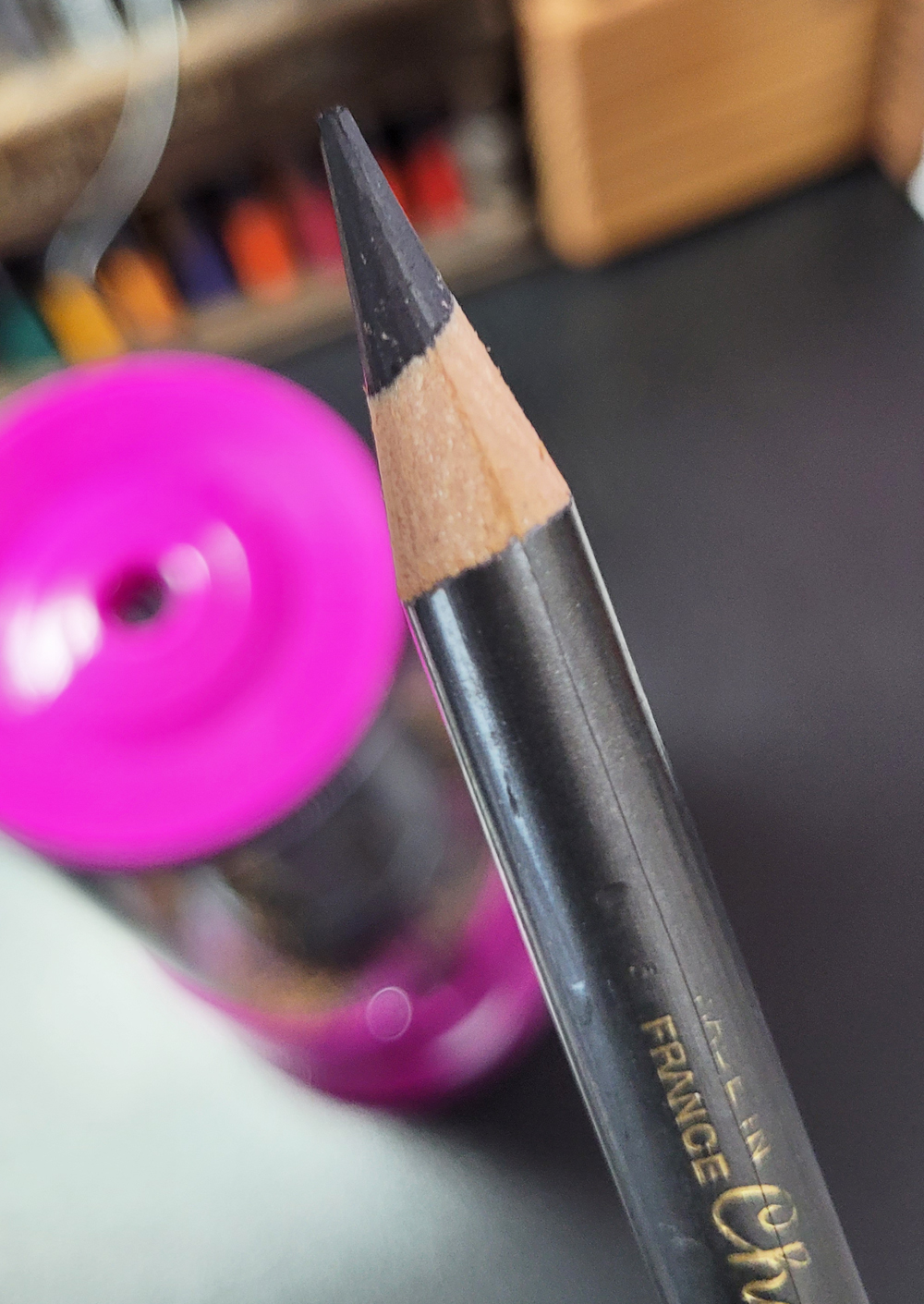
...and after.
Conte charcoal pencil before sharpening... 

Next I tested a Derwent Drawing, a Museum Aquarelle, a vintage Berol Prismacolor and a Blackwing graphite pencil (the latter two have standard-size barrels). All came out with stunning points.

From top: Conte charcoal, Berol Prismacolor, Derwent Drawing, Caran d'Ache Museum Aquarelle, Blackwing


Since the AFMAT accommodates all the sizes of barrels I use most frequently, I can replace the now-questionable Bostitch that takes up so much space on my desktop. The slim AFMAT takes up less than half the footprint. Bonus: It comes in purple!

Edited: Anne’s question below prompted me to test a few more pencils, and I was surprised that these fit: The square-barreled Brutfuner colored pencil and the “jumbo mini” size Gekkoso 8B graphite pencil, which has a whopping 9mm diameter barrel! (Sadly, the Stabilo Woody does not fit, but I can’t imagine too many electrics or hand-cranks that could accommodate that fatty.) The AFMAT is becoming more versatile by the minute!


Square-barreled Brutfuner and Gekkoso: Two more difficult-to-sharpen pencils that the AFMAT handles with aplomb!

From left: Square Brutfuner, 9mm Gekkoso, Prismacolor for scale

Friday, August 4, 2023

Mini Reviews: Two Pink Sharpeners and One Transparent One

The Carl Coloris

Most of the hand-crank and all the electric pencil sharpeners I own are strictly utilitarian work horses that serve my day-to-day needs. But others have simply whispered my name late in the evening (when I am at my retail-weakest) and watched my eyeballs turn into hearts; these may or may not have utility as their primary feature. Today I’ll show you three that fall in the latter category (all of which happen to be Japanese).

First up is the one I’ve owned the longest, the bright magenta Carl Coloris (which also comes in blue). I already knew that I loved the Carl Angel-5 Royal sharpener, one of my daily work horses, so I was reasonably confident that it would function well. I bought it because I had heard that it would accommodate larger-barreled pencils (like my beloved Caran d’Ache Museum Aquarelles, among others) and has an adjustible point switch, just as my Royal does.

A fun, modern shape

Beautiful Carl points on both standard and larger barrels.

Indeed, it functions as well as the Royal, except that it’s more clackety and feels rougher. Less expensive than the Royal by quite a bit, it may look cuter and more modern (not to mention pink), but its build feels a little less refined. Its benefit over the Royal is that it’s smaller and lighter, so I have come to think of it as my “portable” hand-crank. In fact, I have taken it to colored pencil classes where I knew I would be sharpening constantly, and I thought that using my portable electric Ruiya would have been frowned upon. The clackety Coloris is noisy enough that it may have been frowned upon also, but it gets the job done beautifully.

The adorable but so far useless Nakabayashi
Second of the pink sharpeners is the adorable Nakabayashi (also available in lime, blue and white). That link goes to Amazon, but I got mine at JetPens, where it was being closed out at a significant discount a while back – and maybe that should have been a clue.

Unfortunately, I have never successfully sharpened a pencil with this cute thing that looks like a Japanese wastebasket. It’s impossible to use without holding the pencil while also cranking. It comes with a desk clamp, which would free one hand, but I don’t like to attach sharpeners to my desk, because then I can’t move it out of the way when I’m not using it. Cute but currently useless. If I ever decide to clamp it, I’ll find out how well it sharpens.


The most intriguing of the three is also my latest acquisition: the Sonic Toga Return. It’s not pink but, almost better, it’s completely transparent. Sonic is the maker of the Sonic Ratchetta sharpener, which I included in a review of several handheld sharpeners at theWell-Appointed Desk. The Sonic Toga Return evokes the transparent Ratchetta with all of its visible gears and mechanical parts.

Enthusiastic Sonic Toga box

Before I get to those mechanical parts, though, I have to comment on the box, which has not one word of English. Without even being able to read it, so much excitement is expressed! It’s like a comic book or 1960s print advertising. I appreciate that this product is being marketed strictly for a Japanese audience. (I have a similar experience when I’ve visited a foreign country and found a restaurant with no English on the menu: It’s a signal that mostly non-tourists eat here, which usually means better, more authentic food, and I will have to work harder to get what I want, which usually means that interesting interactions with native speakers will ensue.)


A protective sliding cover conceals the hole when not in use.

Sadly but not surprisingly, larger-barreled pencils won’t fit into the Sonic Toga. I first tried sharpening a Blackwing. Pushing the pencil in as far as I thought was necessary, it required a deeper push, which felt a bit uncomfortable. That’s when I realized that the Sonic’s mechanism sort of sucks the pencil in – and then I instantly learned why it has “Return” in its name. When sharpening is complete, the sharpener’s innards spit the pencil back out! The Blackwing barely needed sharpening, so it kept spitting it back out repeatedly. I thought I was doing something wrong, but that’s the way it works.

This Blackwing wasn't dull enough as a sharpening experiment... the Sonic kept "returning" it repeatedly because it was sufficiently sharp.

Next I tried a new, unsharpened Mitsubishi “Matured” pencil. As before, I pushed it in and started sharpening. When it was fully sharpened, the Sonic Toga “returned” it. Of course, it’s fun to watch the colorful plastic gears going around! (I should make a video showing the movements, but I don’t have anywhere to post a video.)


A short but respectable point.

Taking only standard-size pencils, the Sonic has less utility for me, but it gets bonus points for its unique appearance and very cool visible mechanism.

Thursday, April 27, 2023

Review: Kitaboshi 6-3-4 Pencil Sharpener


The Kitaboshi 6-3-4 pencil sharpener

When it comes to my larger-barreled pencils that are hard to fit, I’ve mostly resigned myself to the portable sharpeners I already use. They aren’t great, but they accommodate my favorite Caran d’Ache Museum Aquarelles, and they do the job when I’m in the field and need to sharpen before I get home. So although I’m not actively looking for alternatives, if a sharpener fits the Museum’s 8.3mm diameter barrel, I’m always curious. The Kitaboshi 6-3-4 sharpener not only fits; it has an unusual two-step process that seemed worth a look.

With a cute cubic shape, the 6-3-4 is a bit bulky to carry. I had difficulty photographing it, but the top view shows three sides of the lid with each having a pair of holes – one marked 1 and the other 2. The three sides accommodate pencil barrels of 7mm, 8mm and 10mm.

Each of three sides has holes for the 2 stages of sharpening.

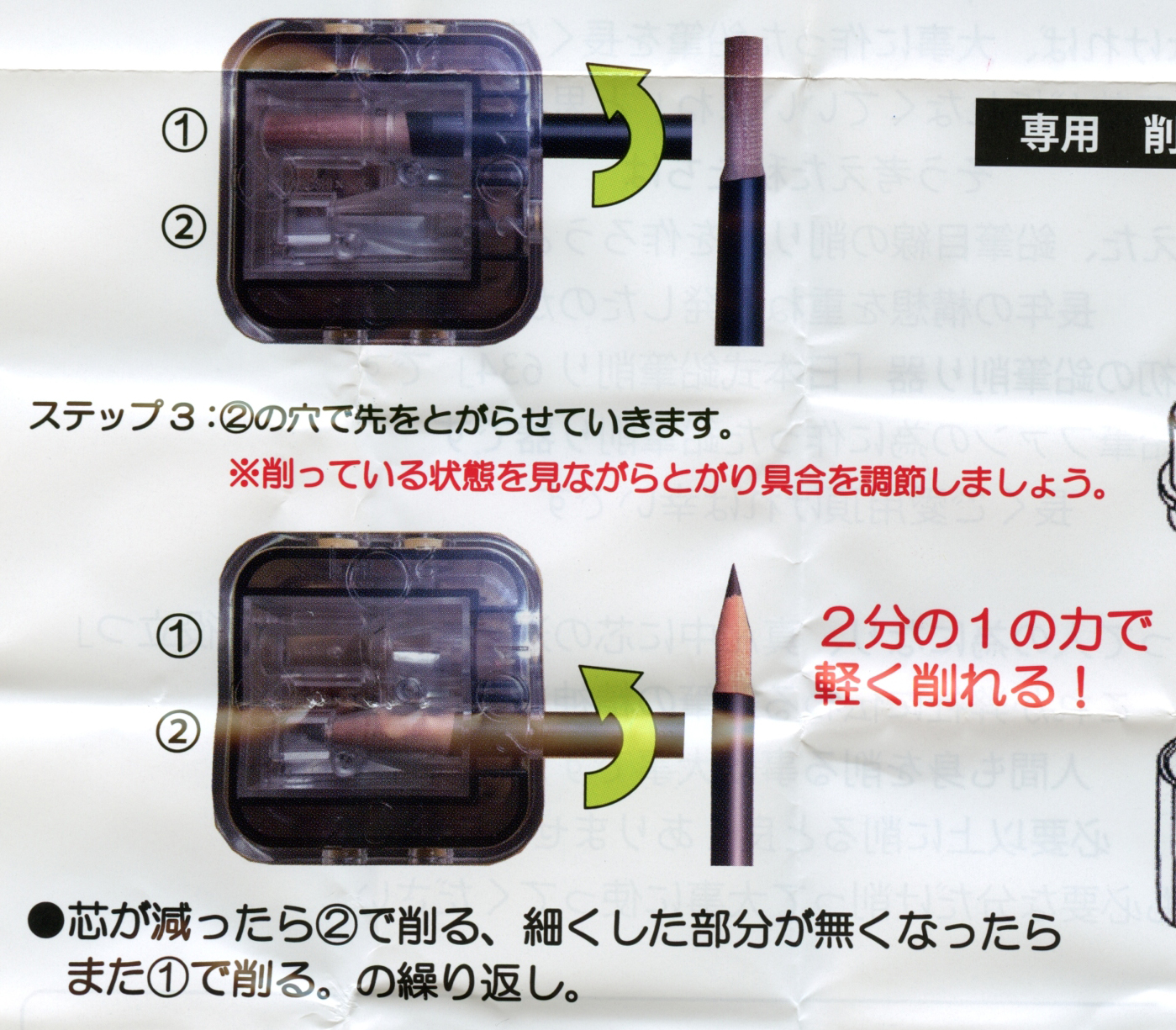
The lid with holes comes off. Rotate it and place the desired holes so that they align with the sharpeners. Shavings fall neatly into the compartment below. It’s a compact, elegant design (as we’d fully expect from a Japanese stationery maker). The instructions are entirely in Japanese, but the images seemed clear enough.

Sharpener with lid removed. Shavings are stored neatly below.


Instructions in Japanese only.

Since I had an unsharpened Berol Prismacolor, I thought it would be a good one to start with: A standard-size barrel and medium-thick core. I chose the middle-size stage 1 hole, which shaved off only the wood in a cylindrical fashion.

Fresh Berol Prismacolor ready for sharpening.


Stage 1 sharpening

Stage 1 complete

Next I put the Prismacolor into the stage 2 hole, which sharpened the exposed wood into the expected conical shape. The point was blunt, which isn’t bad for colored pencil use, but the exposed core is a bit short if one likes to sometimes use the side of a colored core as I do. It was a clean sharpening.

Stage 2 complete

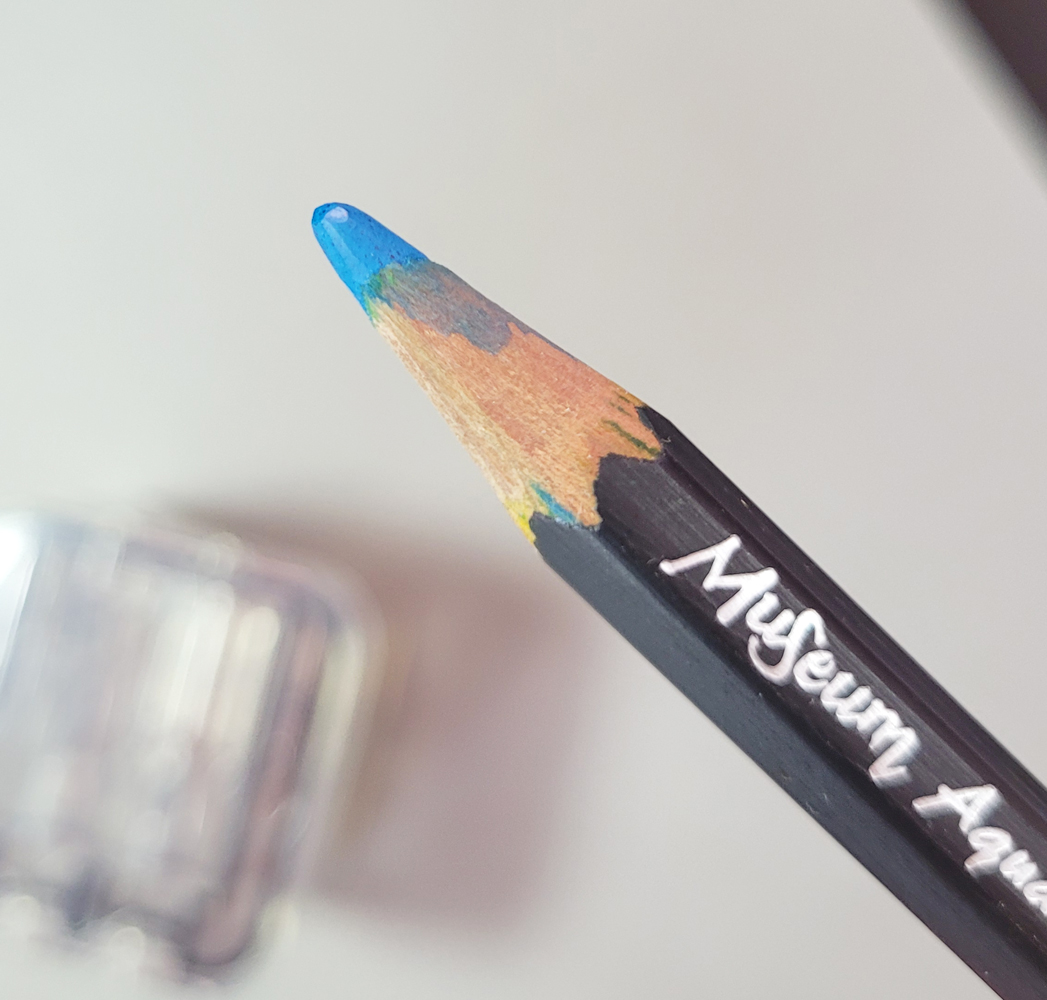
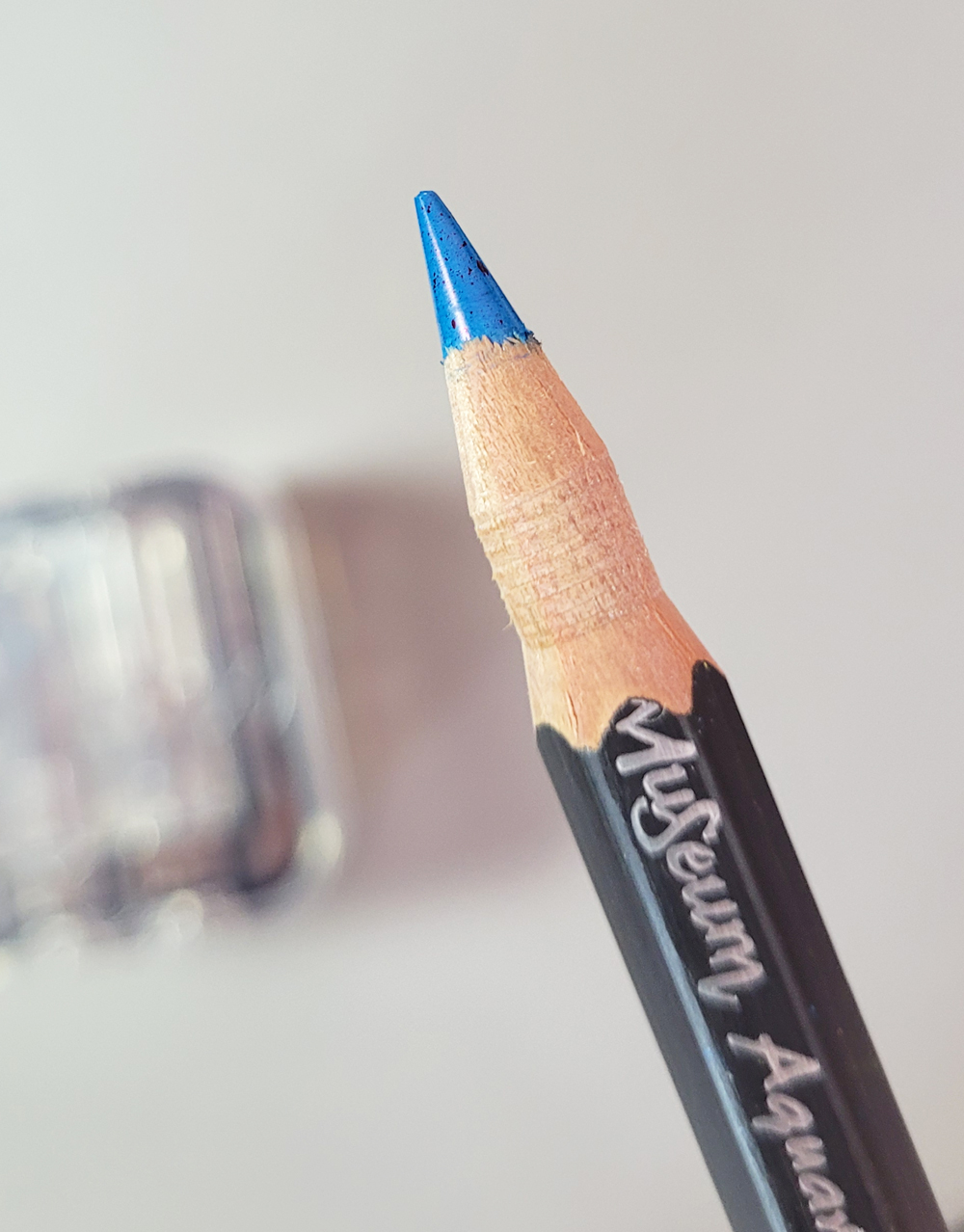
Next I tried an all-important Museum Aquarelle, already sharpened, which fit in the largest hole. I sharpened it at stage 1 longer than I did on the Prismacolor, wondering if that would affect the point. It took down quite a bit of wood, but when I put it into stage 2, the conical section is the same length as the Prismacolor (and I’m left with a bizarre-looking collar), and the point length is the same.

Previously sharpened Museum Aquarelle ready for sharpening.

Stages 1 and 2 complete. An "interesting" collar.

Finally I tried an unsharpened standard-size Tombow Mono R graphite pencil. I obviously used stage 1 too long, because I got the same goofy-looking result. Even if the blunt point were acceptable to me for writing (it isn’t), the core exposure is too short for drawing.


Well, that’s $15 I would have preferred to have wasted on a hat that looks like a pizza. If you like blunt, short points and potentially ridiculous collars, let me know. I’ll send you the Kitaboshi.

By the way, if you’re wondering what the “6-3-4” signifies, based on the packaging image, it indicates that the sharpener will take pencils with hexagonal, triangular and even square barrels.


I wish I had bought the pizza hat instead.

Wednesday, February 24, 2021

Review: Carl Angel-5 Royal Sharpener


The Carl Angel-5 Royal

A woodworker wouldn’t trim the pieces for fine furniture with an ax. Nor would a sushi chef saw a piece of premium sashimi with a serrated tomato knife. Tools are critical. 

How sharp a pencil is makes a significant difference in the result. Which is why I seem to accumulate so many pencil sharpeners: I’m always looking for the one that is going to get the job done in the best way possible. (And sometimes one sharpener will not suit all needs because different stages of a pencil might need different sharpeners.)

I reviewed a couple of excellent sharpeners at the Well-Appointed Desk: the Mitsubishi Uni KH-20 and the Carl Ein. I use the KH-20 in the kitchen, and the Ein is beside my reading/journal-writing recliner in the TV room. (What – you don’t have a sharpener in every room?) But the hand-crank sharpener with the place of honor in my studio is the Carl Angel-5 Royal.

The Royal is the step up from the basic Angel-5. Although I used the basic model for years, I was never quite happy with it. For one thing, it left unsightly bite marks on the pencil barrel where its teeth grip the pencil. But more critical, it could accommodate only standard-size barrels, which meant that I always had to use other sharpeners on some of my most-often-used colored pencils, like the Caran d’Ache Museum Aquarelle and the Derwent Drawing Pencil, both of which have slightly oversized barrels. When I heard that the Royal model would sharpen larger pencils and leave no bite marks, it was an easy decision.

The Royal’s point selector offers a range of point lengths. I use the longest point setting for graphite and hard colored pencils and the shortest for most other colored pencils. 

Point-length selector

It produces a stunning point each time. I am not afraid to use it even on delicate vintage pencils because I know the barrel will not be marred.

From top: Caran d'Ache Museum Aquarelle, Faber-Castell Polychromos, Mitsubishi Penmanship 4B, Palomino Blackwing


Alas, it doesn’t accommodate jumbo or semi-jumbo barrels. (For those, I still use my stalwart Bostitch QuietSharp 6.)

The only caveat needed with the Royal is its shavings-collection drawer. It slides out very loosely and freely – very. (Let me tell you, cleaning up a pile of shavings from the carpet is not my favorite task.) This surprises me a bit for a Japanese-designed product. The drawers on both the Uni and the other Carl model mentioned earlier have enough resistance that they wouldn’t fall out without a push.

Careful of the drawer, or you'll find the contents on your floor.

Even so, the Royal has become my studio favorite.

My Museum Aquarelles are happy, and so am I.

Thursday, May 14, 2020

The Shorter, the Better

Three hand-crank sharpeners. The one on the right does not accommodate
my favorite colored pencils.

When a pencil costs more than $4 each, you can bet I want to use it all the way down to its shortest stub. At some point, a pencil gets so short that it’s difficult to hold. Until I found a pencil extender that would accommodate my favorite Caran d’Ache Museum Aquarelles, I simply stopped using them at the point of discomfort. Of course, I kept all the semi-stubs, waiting for the day when I would find an extender that fits. Thankfully, I finally did – it’s made by Derwent.

The second issue with pencil stubs, however, is that they eventually become too short to sharpen with a sharpener. My electric Bostitch Quiet Sharp 6, which is my fastest and most efficient for sharpening those Museum Aquarelles, has a long tunnel before the pencil reaches the blade, so a pencil must be at least 3 inches long.

The Uni KH-20 can sharpen a Museum Aquarelle all the way
down to the end cap.
That’s the point where my latest sharpeners come in. I just reviewed two hand cranks, the Uni KH-20 hand crank and the Carl Ein, over at the Well-Appointed Desk, so please go read the review for all the details. One thing I didn’t mention there because I didn’t know it yet is that both the Uni and the Carl Ein can take pencils as short as 2 inches. Now I can use either hand crank (I prefer the red Uni only for esthetic reasons) to get my Museum Aquarelles an inch shorter. And yes, both hand cranks accommodate them!

When they are shorter than 2 inches, my Museum stubs require an M+R brass portable hand sharpener to get them a bit shorter. After that, it’s a knife.

A practical person might look at this progression of sharpeners and suggest: Why not use the M+R brass at any length? Wouldn’t one sharpener be simpler than four? Certainly. But what’s the geeky fun in that?

Four sharpeners (as if I have only four!) are better than one.

Top: the shortest stub I can sharpen with my electric Bostitch. 

The Caran d'Ache Museum Aquarelle and the Derwent extender were made for each other!
Plenty of life left in this little stub.
A few other sharpeners.

Wednesday, February 19, 2020

Review: Ruiya Electric Sharpener

Ruiya sharpener: Small footprint, big sharpening mojo.

For the past couple of years, the Bostitch Quiet Sharp 6 has been my favorite electric pencil sharpener. I have shoved every pencil I own into one of this workhorse’s six holes, and it will accommodate all but the most jumbo of jumbos. Specifically, my most used Caran d’Ache Museum Aquarelles fit beautifully, and that’s no small feat. Along with Derwent Drawing Pencils (another favorite), the Museum Aquarelles have a barrel that is just slightly wider than standard pencils, so finding a sharpener with a hole large enough is a significant issue.

Several months ago, I was looking for a battery-operated sharpener to keep downstairs in the kitchen. I came across a small Ruiya electric, which is about 3½ inches tall and less than 5 inches wide. My plan for it was to sharpen standard graphite pencils that I tend to use for grocery lists and such. That’s all it was doing for a while, and I was impressed by the clean, sharp points it makes without giving me lethal weapons (which tend to snap off under my heavy hand). A dial can be turned to change the point from a sharp one to a slightly blunt one (which can sometimes be preferable when using colored pencils).

Nice points!
One day I became curious about how large a barrel the single hole would accommodate, and to my surprise, even the Derwent Drawing Pencils fit. Sadly but not surprisingly, the Museum Aquarelles do not fit (and strangely, nor do Faber-Castell Albrecht Durer pencils, which I always thought were standard size, but they are ever-so-slightly larger. Apparently the hexagonal barrel keeps it from fitting; the Derwents look the same size but are round, so they do fit.) But the rest of my most-often-used colored pencils – F-C Polychromos, vintage Prismacolors, Cd’A Supracolors – all fit well and sharpen beautifully.

What’s more, when I want a sharp, crisp point for writing or drawing details, all my favorite graphite pencils – Mitsubishi Hi-Uni, Tombow Mono, Blackwings – and other standard-size graphite pencils sharpen better in the Ruiya than in my Bostitch, which gives a blunter point.
Turning the dial varies the point's sharpness.

Bonus "points" for the Ruiya: It makes a much smaller footprint and elevation on my desk compared to the hefty Bostitch. Even better, it’s so lightweight and compact, as well as having the option for battery power (it can also run on AC), that I am able to take it easily to drawing classes.

Unfortunately, I can’t replace the Bostitch with the Ruiya completely because I still need the former for Museum Aquarelles. But I can move the Bostitch to a less prominent place in my studio and get a little more space back on my desk. This little cordless Ruiya is a keeper. In fact, I got a second one to put back in the kitchen.

Have a sharp day!
Related Posts Plugin for WordPress, Blogger...