Sunday, April 6, 2014

Words of Wisdom from the Seattle Sketcher

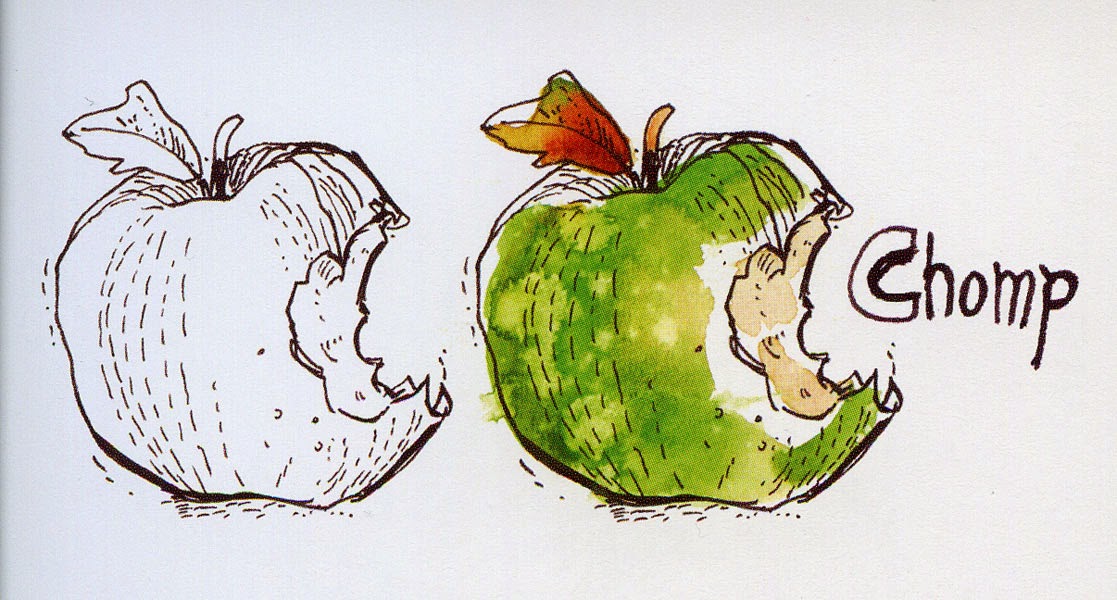
4/5/14 Pilot Iroshizuku Take-Sumi ink, Canson XL 140 lb. paper
Yesterday when I saw the “Drawn to Seattle” exhibit at MOHAI again, I transcribed the placards that included tips from Gabi Campanario. The exhibit ends next month, but his thoughts on urban sketching will continue to remind me of why I’m an urban sketcher:
  • Urban sketching gives you a chance to step away from the computer and just draw for the sheer joy of it without deadline or objectives. It has the power to turn a moment of boredom into a creative pastime.
  • If you make urban sketching part of your routine and continue it in your travels, you not only end up with a work of art in your hands, but you also create a de facto journal of your life. The sketches will bring back memories like a picture wouldn’t, evoking the sounds, smells and recollections of the place where you did it.
  • Sketching is a form of visual documentation that is accessible to all. No easels or expensive oil paints needed, just a pen and a piece of paper, and you are all set to get started.
4/5/14 Pilot Iroshizuku Take-Sumi ink, Sailor pen
  • My sketching tools are simple: fountain pens loaded with waterproof ink and watercolors. I try to finish the sketches on location, but I add washes of color later if I don’t have enough time to do it on the spot. I don’t use photographic reference.
  • As hobbies go, urban sketching gives you a lot of bang for the buck. With as little as a piece of paper and a pencil, you are equipped to start drawing your city or village, the people who live there and the things that are happening in it.
  • A sketch can be completed as simply and quickly as you like. It may be a five-minute study of the view from the window, or you could spend an hour or two capturing the way the light hits that beautiful old church in your town. In either case, sketching stops the clock and lets your mind turn off the noise.

     -- Gabriel Campanario, the Seattle Sketcher

Saturday, April 5, 2014

Sketcher in Residence, Part 3

4/5/14 Platinum Carbon ink, Pitt Artists Brush Pens, Zig marker,
watercolor, Canson XL 140 lb. paper
Today was my third and last Urban Sketcher in Residency at the Museum of History and Industry. Again, I was hoping for a dry day to sketch outdoors, but it rained. Like last time, I lingered over lunch at MOHAI’s Compass Café (I had my favorite Radiatore, which is glorified mac ‘n’ cheese, but it’s got both Beecher’s and Tilamook cheeses. . . yummmm!) while sketching the beautiful old clock through the window.

Since it was probably my last opportunity to be in the museum before Gabi Campanario’s “Drawn to Seattle” exhibit ends in May, I wandered slowly through the whole exhibit again. Each time I look at his sketches, I notice more details I missed previously, I learn a little more about sketching, and I learn a little more about my hometown.

During my gig in the visitors sketching area, I met a woman – not yet a sketcher but wanting to be – who was seeing Gabi’s show for the third time so far, getting more and more inspired to sketch each time. She asked me a lot of questions about how to get started and get over the intimidation of the blank sketchbook page. She’d taken classes, but she couldn’t bring herself to do it on her own. She enjoyed seeing sketches online on the Urban Sketchers blog, but they, too, were intimidating – all those gorgeous buildings that she could see were drawn by architects, she said.

My suggestions to her included my usual personal philosophy and attitude about sketching – to practice every day or as often as possible, carry a sketchbook at all times etc. But most important, I told her, was to find subject matter that resonated with her. I told her about my own experience over the many years that I had tried to learn to draw, when the habit never “stuck.” Like she had, I had taken drawing classes, but putting shading on a bunch of cubes stacked up in a classroom bored me silly, and I felt no compulsion to practice. I mentioned that it wasn’t until I discovered urban sketching – first through the Seattle Sketcher’s column and then through the Urban Sketchers blog – that I finally saw subject matter that resonated with me. So my main advice to her was to find things to draw that she is drawn to – and then the practice becomes a joy.

My thanks to Gabi and MOHAI for giving me these opportunities to be an Urban Sketcher in Residence!

Friday, April 4, 2014

Magnolia

4/4/14 Platinum Carbon ink, Kuretake brush pen, Pitt Artist brush pen, watercolor,
Canson XL 140 lb. paper
A half-block over on Northeast 81st Street stands this Magnolia tree. Has it always bloomed as magnificently as it has this year? Or is it just that I wanted an opportunity to use Alizarin Crimson straight from the tube?

Thursday, April 3, 2014

Hit or Miss

4/3/14 Pilot Iroshizuku Take-Sumi ink, Zig marker, Canson XL
140 lb. paper
For me, sketching is a hit or miss game.

This morning at Zoka Coffee, I got the proportions wrong on the man with the orange coffee mug (lower left) – his torso looks too long (I blame his shirt, which wasn’t tucked in, so I couldn’t see his belt line), and maybe his arms, too. But I was pleased with the folded hands of the man wearing headphones (praying to his iTunes god, no doubt). The woman reading her tablet turned out to be an OK composition.

4/3/14 Private Reserve Velvet Black ink, Zig marker
Two hits, one miss: Not bad for a 16-ounce cup of coffee. The blueberry scone wasn’t too bad, either.
4/3/14 Private Reserve Velvet Black ink, Zig marker 

Wednesday, April 2, 2014

Farm House Tree

4/2/14 Kuretake brush pen, Platinum Carbon and Diamine Grey inks, watercolor,
Zig marker, Canson XL 140 lb. paper
“Do you know the story about that house?” the woman asked. She and her husband had been walking the path around Maple Leaf Park when they stopped to admire my sketch. When I replied that I didn’t, she told me that it was the original farm house back in the day when the whole area where we were standing had been covered with pear orchards.

You can probably tell that I was more interested in the huge leafless tree than in the house behind it, which I was tempted to skip altogether except that, in faithful Urban Sketcher style, I wanted to include some context to give the tree scale. But after she told me about the house’s origin, I was happy that I had included it after all.

In the book I reviewed this morning, Felix Scheinberger says, “If you have a personal or emotional relationship with your subject, this meaning will creep into your picture almost magically and will also reach its viewers.” It’s very true – if I know something about my sketch subject, no matter how little, it helps me sketch it better. Maybe next time I’ll try a sketch with the house as the primary subject rather than the tree, and that small factoid I learned about it will make the house resonate with me.

But back to the tree. The woman I chatted with told me that she and her husband have lived in the neighborhood for 48 years, and she thinks this tree is well over a hundred years old. She also told me it’s a maple. You can bet I’ll be back in the fall to sketch this tree again.

(By the way, I sketched this view from the same spot from which I had sketched the sculpture and water tower the other day – except turned around 180 degrees.) 

Book Review: Urban Watercolor Sketching

Any book with the words “urban sketching” in the title catches my eye, and this one by Felix Scheinberger was no exception: Urban Watercolor Sketching – a Guide to Drawing, Painting and Storytelling in Color. Translated from the German, the book is filled with the author’s watercolor illustrations (such as of suggested art materials) and many colorful examples of his whimsical work. The examples are not strictly about urban sketching (as in the manifesto), though, and the original title, Wasserfarbe für Gestalter, translates to “Watercolor for Designers,” so the English-language title may have been a marketing ploy to glom onto the current popularity of urban sketching.

Still, I think it’s an appropriate title because the author clearly expresses an urban sketcher’s attitude: “Paint what’s around you – things that you can easily reference. Artists ought to be authentic and tell something about their world.” He points out that of all the painting media, watercolor is uniquely suited for sketching on location: “Watercolor can go anywhere. It is an autonomous, free and creative medium. It makes the world our studio.”

If you are looking for a step-by-step, how-to approach to watercolor technique, you will not find it here. Scheinberger’s lively, informative book is more about expression and using the unique features of the watercolor medium to find that expression. An ancient Chinese parable that he relates at the beginning of the book sets the tone for using watercolor: Learn a few techniques that require much time and practice to fine-tune.

I’ve read numerous books on watercolor technique, and I think this is the first I’ve seen that spends several pages on the medium itself – its ancient roots, how it is made, why some pigments are more expensive than others – and provides this potentially dry and technical information with an irreverent, entertaining tone. (Kudos to translator Faith Ann Gibson for capturing the author’s intended voice.) Scheinberger knows his stuff, and he conveys it without sounding like he’s giving us a lecture.

Unlike most watercolor books that assume that the reader has taken for granted the use of color, Scheinberger takes time to tell and show how the addition of color to a line drawing gives it life:

“A drawing – and even more so a sketch done in pen or pencil – conveys something that is hard to grasp, something that seems indefinite. When color is added, in a manner of speaking, we enter the ‘real world.’ . . . Color is demanding and enriches our pictures with a sensual aspect. A drawing of a cake merely describes its shape, but a painting of a cake makes it mouthwatering.”

As far as watercolor technique goes, Scheinberger believes that by combining only two basic techniques – glazing (one or more transparent layers applied after the previous layer is dry) and wash – you can achieve nearly any effect. While glazing offers more control, letting colors mix serendipitously in washes allows the uniquely luminous properties of watercolor to shine. The two together enable you to apply a degree of control to what is a “willful and anarchical” medium. “If we sacrifice the right amount of control in the artistic process, watercolor’s inherent qualities begin to work to our advantage.”

Sketch by Felix Scheinberger in his book, Urban
Watercolor Sketching
While most of the watercolor techniques he describes were familiar to me, one was not! We’ve probably all heard about sprinkling salt onto wet paint to get interesting mottled effects, right? But did you know you can get a similar mottled effect with saliva? (Not quite as easy to apply with accuracy, but certainly more readily available!)

Especially enlightening to me was seeing Scheinberger’s examples of color used to unify a composition and using spots of color judiciously to bring the eye to the focal point – “less is more.” I read a public library copy of this book, but I may decide to buy a copy, if only to enjoy Scheinberger’s expressive, mood-infused sketches again and again.

(This review also appears on Amazon.com.)

Tuesday, April 1, 2014

Not Quite Leaves

4/1/14 Platinum Carbon ink, Kuretake brush pen, watercolor,
Zig marker, Canson XL 140 lb. paper
Everywhere I look, I’m starting to see bits of pale green on trees. They aren’t quite leaves yet, but they’re not buds anymore, either – they’re more like tiny clusters of pre-leaves. (I’m sure there’s a technical name for this stage, but I like the term pre-leaf.) Last October I sketched this same traffic circle maple when it was in its full fall glory. Soon it will be so full of leaves that I won’t be able to see its limbs anymore, so when I passed by it today, I decided it would be a good time to catch it in this delightful state – full of promise.

I’m not going to miss sketching trees in their bareness, but I’ve come to appreciate what they’ve taught me about the shapes of trees. In fact, I’ve learned that every season has something new to teach. It’s been more than a year – four complete seasons – since I declared that trees were a sketching nemesis. I’ve since called a truce, not because I’ve conquered them (they will probably remain a challenge for as long as I sketch), but because it’s impossible to have an enemy that gives me so much joy.

Technical note: In January when I sketched this same tree completely leafless, I had said that my Sailor pen was made for sketching bare limbs. But after sketching bare trees all winter, I’m now declaring that my Kuretake Fountain Brush Pen is ideal for sketching tree limbs. I don’t think I can get this kind of line with any other sketching instrument in my vast arsenal.

Another technical note: The last couple of times that I’ve opened up my watercolor box, I’ve found mold growing on my blob of DS Quinacridone Sienna. I’ve never seen mold on any other paint, and in the year or so that I’ve kept Quin Sienna in my kit continuously, I’ve never seen mold on it – until now. I don’t think I’m treating the paints any differently than before, and they almost always get a chance to dry out between uses. Have you seen this happen? Any suggestions?
Related Posts Plugin for WordPress, Blogger...